Introduction
Tajikistan’s economy is shaped by hydropower and energy projects, mining and metals, construction and public works, agrifood and light manufacturing, trade and cross-border logistics and a steadily growing telecom and digital-services base. Many organisations work with regional buyers, development projects and public procurement where documented systems and consistent records are expected.
ISO 9001 (Quality Management), ISO 14001 (Environmental Management) and ISO 45001 (Occupational Health & Safety), Tajik companies can stabilise quality, reduce waste and strengthen site-safety and environmental control across plants, projects and service networks. For utilities, contractors, logistics operators, food businesses, banks and ICT, ISO certification is also a practical step to meet energy, security and continuity expectations. These programs provide auditable proof across quality, safety, environment, energy, security and continuity.
Share your scope and sites for Tajikistan with Pacific Certifications and we’ll map accreditation coverage, recommended audit days and Stage-1 and Stage-2 windows that suit your seasonality and operations.
Economic context and industry overview
Tajikistan is an energy and infrastructure-focused economy with strong reliance on hydropower, construction and transport links that connect Central Asia with markets to the south and east. Mining and metals, including gold and other industrial minerals, remain important for exports and local supply chains. Agriculture also supports national employment, with cotton, fruits, vegetables and food processing contributing to domestic demand and regional trade.
Urban growth and public works are pushing demand for consistent contractor quality, safer worksites, controlled environmental practices and reliable utilities. At the same time, telecom and digital platforms are expanding across cities and regional centres, increasing expectations for measurable service quality, data control and uptime.
Why ISO certifications matter in Tajikistan?
Buyers, lenders and public bodies want evidence-based systems with traceable records. ISO management systems help teams clear vendor reviews faster, keep worksites and service lines steady, cut incidents, and protect data and uptime. With ISO 9001, contractors, utilities, workshops, service providers and manufacturing lines gain firm process control and supplier oversight. Environmental health and safety gain discipline from ISO 14001 and ISO 45001 across construction sites, plants, depots and logistics yards. For energy performance, ISO 50001 lets large users show measured results in hydropower-linked and industrial settings.
ISO/IEC 27001 and ISO 22301 strengthen trust in digital services and continuity for banks, telecom and public platforms. ISO 22000 provides HACCP-based assurance for agrifood, hospitality and cold-chain operations.
Popular ISO standards in Tajikistan
| Industry focus | Commonly requested standards | Why they matter |
| Hydropower, utilities and energy projects | ISO 9001, ISO 14001, ISO 45001, ISO 50001, ISO 22301 | Works quality, EHS, energy performance, service continuity |
| Mining, metals and processing | ISO 9001, ISO 14001, ISO 45001, ISO 50001 | Process control, site safety, environmental care |
| Construction, EPC and public works | ISO 9001, ISO 14001, ISO 45001, ISO 22301 | Tender readiness, safer projects, stable delivery |
| Agrifood, cold-chain and hospitality | ISO 22000, ISO 9001, ISO 14001 | HACCP, traceability, hygiene, waste control |
| Airports, road freight, warehouses and 3PL | ISO 9001, ISO 14001, ISO 45001, ISO 28000, ISO 22301 | Turnaround discipline, yard safety, chain security |
| Banks, telecom, cloud and public platforms | ISO/IEC 27001, ISO 22301, ISO/IEC 20000-1, ISO/IEC 27701 | Security, uptime, IT-service quality, privacy |
| Healthcare, labs and diagnostics | ISO 9001, ISO 15189, ISO/IEC 17025 | Patient trust, valid methods, competence |
Certification process in Tajikistan
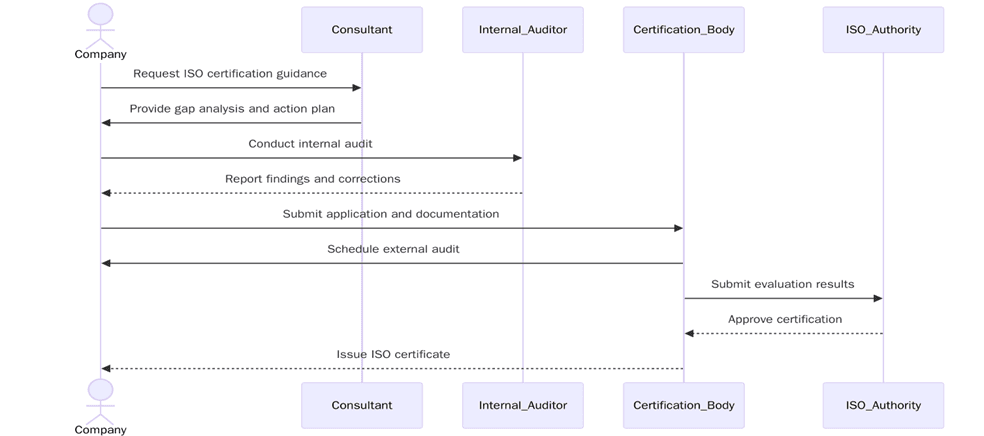
Preparation starts with an honest view of how work runs today and how evidence is captured. The aim is to make your system auditable without reinventing daily routines. Below are the steps to consider:
- List products, services, sites, headcount and high-risk processes for clear scope
- Map processes end-to-end to show handoffs, records and responsibilities
- Set policy and measurable objectives linked to customer and legal needs
- Assemble evidence packs for operations, maintenance, labs, IT and logistics
- Train process owners, keep competence matrices and attendance records current
- Calibrate instruments, verify methods and file certificates for quick checks
- Keep permits, licences and regulatory reports organised for quick verification
What are the requirements of ISO Certifications in Tajikistan?
Implementation should mirror real work in power plants and project sites, mines and processing units, warehouses and yards, clinics and labs, kitchens and cold rooms and data rooms so records hold up in audits, inspections and buyer reviews; below are the key requirements:
- Scope aligned to products or services, processes and sites including multi-site programs
- Controlled documents and records that reflect practice not theory
- Risk assessment with operational controls for actual hazards, HACCP, site safety, environmental aspects, privacy or security, energy and change-management
- Competence matrices and training records for process owners and high-risk roles
- Internal audits with reports, nonconformities, root-cause actions and verified closures
- Management review with inputs, KPIs, audits, incidents or complaints, legal updates and tracked decisions
- Standard-specific artefacts: HACCP and CCP logs (ISO 22000) Statement of Applicability and risk files (ISO/IEC 27001) HIRA and PTW (ISO 45001) aspect-impact registers and objectives (ISO 14001) energy review and EPIs (ISO 50001)
- Legal and other requirements register with permits, inspections, calibrations, monitoring data and supplier compliance proofs
Tip: Align controls to hydropower and construction safety rules, mining environmental expectations, food-hygiene and veterinary requirements for agrifood exports and buyer expectations for secure and stable digital services.
What are the benefits of ISO Certifications in Tajikistan?
Use certification to move faster through tenders and vendor onboarding, reassure lenders and partners and keep work steady across seasons and sites; below are the key benefits:
- Faster prequalification in buyer portals and public procurement
- Fewer incident, defect and stoppage events on sites, plants and service lines
- Clear roles and skill paths for operations and maintenance teams
- Traceable data for warranty claims, due-diligence and sustainability reporting
- Stronger supplier control through audits, KPIs and corrective actions
- Measured gains in energy use, waste control, emissions tracking, uptime and yield
- Stronger brand signals for regional trade and long-term infrastructure programs
Market Trends
Recent trends and market demand in Tajikistan show growing interest in integrated systems that combine ISO 9001, ISO 14001 and ISO 45001 for contractors, utilities, mining groups and logistics operators. Energy-focused organisations and large facilities are also giving more attention to ISO 50001 as energy performance and investment scrutiny rise. Digital growth in banking, telecom and public platforms supports steady demand for ISO/IEC 27001 and ISO 22301 to demonstrate structured security and continuity controls.
Challenges faced in Tajikistan
Demand, regulation and records discipline are rising; related to getting certified can cause delays when budgets and staffing are tight, documentation and records are incomplete or outdated, internal audits and corrective actions are weak or multi-site sampling complicates logistics; below are the key challenges:
- Budgeting for certification time and system upkeep
- Treating ISO as paperwork in some teams which slows adoption
- Shortage of trained internal auditors outside main hubs
- Stalling on document control, internal audits and corrective-action discipline
- Multi-site and supplier sampling complicating logistics and evidence quality
What is the cost of certification in Tajikistan?
Budgets are confirmed after scoping and reflect headcount and risk, the number and spread of sites, your standards set, single or integrated such as 9001+14001+45001, sector sampling depth for power plants, mines, warehouses, clinics, hotels or cold chains and any field logistics. Your proposal itemises Stage-1, Stage-2 and surveillance days, clarifies on-site versus remote activities and highlights any multi-site efficiencies for predictability.
For personalized quote, contact support@pacificcert.com.
What is the timeline for certification in Tajikistan?
Timelines depend on document and record readiness, the speed of closing Stage-1 findings, single- versus multi-site scope and whether the program is single-standard or integrated. Planning around winter site access, project ramps and auditor travel to distant regions also affects duration. A prepared single site can move from application to decision within one audit cycle. Multi-site or integrated programs need additional sampling and planning time.
Important standards often requested by buyers in Tajikistan
| Standard | Typical drivers in Tajikistan |
| ISO 9001 | Prequalification for EPC vendors, utilities, mining services and public contracts |
| ISO 14001 + ISO 45001 | Construction and site EHS controls, lender and buyer expectations |
| ISO 22000 | HACCP and traceability for agrifood, hospitality and cold-chain |
| ISO/IEC 27001 + ISO 22301 | Security and continuity for banks, telecom and public platforms |
| ISO 28000 | Chain security for logistics and corridor trade |
| ISO 50001 | Energy performance for utilities and large industrial users |
How Pacific Certifications can help?
Pacific Certifications audits and certifies ISO management systems for hydropower and utilities, mining and processing, construction and EPC, agrifood and cold-chain, healthcare and labs and ICT or cloud across Tajikistan. We work under recognized accreditation with transparent pricing and a team that understands site realities and buyer expectations. Our certificates are accepted by procurement portals and international customers and we are recognized by ABIS.
Request your ISO audit plan and fee estimate. We will help you map Stage-1 and Stage-2 timelines and evidence requirements for your organization. Contact us at support@pacificcert.com or visit www.pacificcert.com.
Accredited training programs
Pacific Certifications provides accredited training programs in Tajikistan for ISO 9001, ISO 14001, ISO 45001, ISO 22000, ISO/IEC 27001, ISO 22301 and ISO/IEC 20000-1.
- Lead Auditor Training: for professionals auditing these systems in Tajik industries.
- Lead Implementer Training: for personnel establishing or improving systems in power projects, mines, cold chains, hospitals, utilities and digital platforms.
These programs are conducted online or onsite, depending on client needs under ISO/IEC 17024 for personnel certification.
FAQs
How long does certification take in Tajikistan?
A prepared single site can complete in one audit cycle.
What factors determine audit time?
Headcount, risk, number of sites, chosen standards and field logistics.
Can audits be partly remote?
Yes, records reviews and interviews can be remote with targeted on-site sampling.
What fits mining and processing companies?
ISO 9001 with ISO 14001 and ISO 45001, often supported by ISO 50001.
Which standards suit construction and EPC contractors?
ISO 9001, ISO 14001 and ISO 45001 for tender and project control.
What suits agrifood and cold-chain operators?
ISO 22000 with ISO 9001 for HACCP and service consistency.
How do banks and telecom platforms benefit?
ISO/IEC 27001 builds security assurance and ISO 22301 supports uptime commitments.
Do you certify SMEs and multi-site groups?
Yes, audit time and sampling are right-sized based on risk and scope.
How do we maintain certification?
Run internal audits on schedule, close nonconformities, hold management reviews and complete surveillance and recertification on time.
Ready to get ISO certified?
Contact Pacific Certifications to begin your certification journey today!
Suggested Certifications –
Read more: Pacific Blogs