Introduction
Romania’s economy blends Black Sea logistics at Constanța, automotive and components in Argeș and Dolj, machinery and electronics, construction and cement, agrifood and cold chain, healthcare and labs, plus a fast-expanding digital layer across banks, telecom and public platforms. By adopting ISO 9001 (Quality Management), ISO 14001 (Environmental Management) and ISO 45001 (Occupational Health & Safety), Romanian companies can steady quality, cut waste and build trust with buyers and regulators. For ports and terminals, EPC and utilities, food processors and ICT, ISO certification is a practical path to win EU and global work. These programs provide auditable proof across quality, safety, environment, energy, security and continuity.
Share your operational scope and sites for Romania with Pacific Certifications and we will align accreditation coverage then propose Stage-1 and Stage-2 audit windows that fit your seasonality and logistics.
Economic Context & Industry Overview
Constanța anchors Black Sea trade with capacity near 1.5m TEU and container moves approaching ~990k TEU in 2024, keeping terminals and 3PLs focused on chain security and disciplined turnaround.
Automotive remains a flagship sector around Dacia Mioveni and Ford Otosan Craiova. Industry tallies show a record 2024 then softer volumes through 2025, which sustains buyer pressure for auditable quality and EHS on export lines and suppliers. On policy, Romania’s draft updated NECP targets a higher clean-power share with ~58.8% renewables in electricity by 2030, while analysts expect electricity demand to rise ~38% by 2030, pulling energy performance and grid-resilience programs into scope.
Why ISO certifications matter in Romania?
Buyers, lenders and public bodies want evidence-based systems with traceable records. ISO helps teams pass vendor reviews faster, hold steady on sites and lines, reduce incidents and protect data and uptime. ISO 9001 supports process control and supplier oversight, ISO 14001 and ISO 45001 lift EHS discipline on plants, projects and terminals, ISO 50001 helps large users show measured energy performance. ISO/IEC 27001 and ISO 22301 build trust for banking, telecom and public platforms. ISO 22000 give HACCP-based assurance for agrifood and cold chain serving export corridors.
Popular ISO Standards in Romania
| Industry focus | Commonly requested standards | Why they matter |
| Ports, terminals, 3PL, free-zones | ISO 9001, ISO 14001, ISO 45001, ISO 28000, ISO 22301 | Turnaround discipline, site EHS, chain security, continuity |
| Automotive, machinery, EPC | ISO 9001, ISO 14001, ISO 45001 | Process stability, emissions and waste control, safer works |
| Agrifood, fisheries, cold chain | ISO 22000, ISO 9001 | HACCP, temperature integrity, traceability |
| Banks, telecom, cloud, public platforms | ISO/IEC 27001, ISO 22301, ISO/IEC 20000-1, ISO/IEC 27701 | Security, uptime, IT-service quality, privacy |
| Power and large users | ISO 50001 with ISO 14001/45001 | Energy performance with auditable EHS |
| Healthcare, labs and diagnostics | ISO 9001, ISO 15189, ISO/IEC 17025 | Patient trust, valid results, competence |
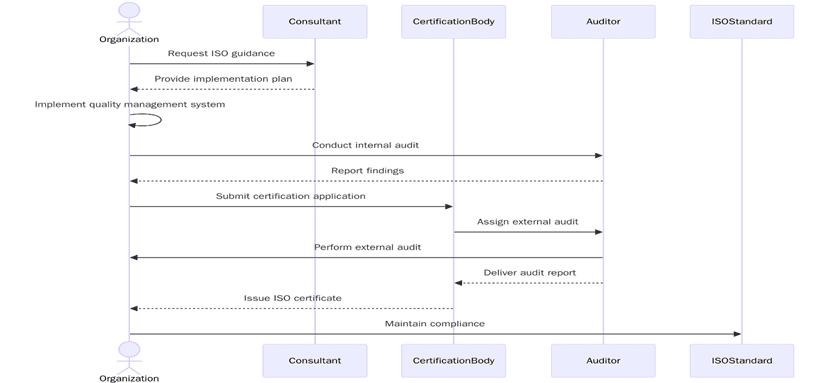
Certification Process in Romania
Preparation starts with an honest view of how work runs today and how evidence is captured. The aim is to make your system auditable without reinventing daily routines. Below are the steps to consider:
• List products services sites headcount and high-risk processes for clear scope
• Map processes end to end to show handoffs records and responsibilities
• Set policy and measurable objectives linked to customer and legal needs
• Assemble evidence packs for operations maintenance labs IT and logistics
• Train process owners keep competence matrices and attendance records current
• Calibrate instruments verify methods and file certificates for quick checks
• Run internal audits that sample high-risk tasks and supplier interfaces
• Hold management review with KPIs audit results complaints legal updates and actions
• Schedule Stage 1 for readiness and Stage 2 for implementation verification align multi-site sampling to risk
• Blend on-site checks with remote interviews where suitable to reduce travel time
• Keep permits licences and regulatory reports organised for quick verification
What are the requirements of ISO Certifications in Romania?
Make the system mirror real work on terminals and yards, plants and projects, clinics, warehouses and data rooms so records hold up in audits, inspections and buyer reviews; below are the key requirements:
- Scope matched to products or services processes and sites including multi-site programs
- Controlled documents and records that reflect practice not theory
- Risk assessment with operational controls for actual hazards, HACCP site safety environmental aspects privacy or security energy, and change management
- Competence matrices and training records for process owners and high-risk roles
- Internal audits with reports nonconformities root-cause actions and verified closures
- Management review with inputs, KPIs audits incidents or complaints legal updates, and tracked decisions
- Standard-specific artefacts: HACCP and CCP logs (ISO 22000) Statement of Applicability and risk files (ISO/IEC 27001) HIRA and PTW (ISO 45001) aspect-impact registers and objectives (ISO 14001) energy review and EPIs (ISO 50001)
- Legal and other requirements register with permits inspections calibrations monitoring data and supplier compliance proofs
Tip: Map controls to GDPR with Romania’s Law 190/2018 and ANSPDCP guidance for any personal data, track NIS2 transposition for essential or important entities, and align with port and maritime safety, veterinary and food-hygiene rules, plus environmental and energy permits for large users.
What are the benefits of ISO Certifications in Romania?
Use certification to move faster through tenders and vendor onboarding, reassure lenders and partners and keep work steady across sites and seasons; below are the key benefits:
- Faster prequalification in buyer portals and public procurement
- Fewer incident defects and stoppages on sites lines and yards
- Clear roles and skill paths for operations and maintenance teams
- Traceable data for warranty claims ESG and due diligence
- Stronger supplier control through audits KPIs and corrective actions
- Measured gains in energy use waste emissions uptime and yield
- Stronger brand signals across EU corridors and global routes
Market Trends
Romania’s updated NECP pathway targets ~58.8% renewables in electricity by 2030 with demand up ~38% versus 2021, which is likely to expand ISO 50001 programs and push continuity plans for grid projects and large users. (source: European Commission)
Constanța’s capacity and 2024 TEU gains keep the Black Sea gateway central to regional flows, reinforcing demand for ISO 9001/14001/45001/28000 and ISO 22301 among terminals, 3PLs and free-zones.
Cyber and public digital services. Romania’s Cybersecurity Strategy 2022–2027 and NIS2 rollout raise expectations for ISO/IEC 27001, ISO 22301 and ISO/IEC 20000-1 across banks, telecom and public platforms. (source: depp.oecd.org)
Challenges Faced in Romania
Operational, regulatory and evidence-readiness issues related to getting certified can cause delays, budget and staffing gaps, incomplete or outdated documentation and records, weak internal audits and corrective actions, supplier-control gaps, multi-site sampling and travel logistics, calibration and permit backlogs, and privacy or cyber mappings for ICT; below are the key challenges:
- Budgeting for certification time and system upkeep
- Treating ISO as paperwork in some teams which slows adoption
- Shortage of trained internal auditors outside core hubs
- Stalling on document control internal audits and corrective-action discipline
- Multi-site and supplier sampling complicating logistics and evidence quality
What is the cost of certification in Romania?
Budgets are confirmed after scoping and reflect headcount and risk, the number and spread of sites, your standards set, single or integrated such as 9001+14001+45001, sector sampling depth for terminals plants warehouses clinics or cold chains and any field logistics. Your proposal itemises Stage-1 Stage-2 and surveillance days, clarifies on-site versus remote activities and highlights any multi-site efficiencies for predictability.
For personalized quote, contact support@pacificcert.com.
What is the timeline for certification in Romania?
Timelines depend on document and record readiness, the speed of closing Stage-1 findings, single- versus multi-site scope and whether the program is single-standard or integrated. Planning around port windows shutdowns project ramps or peak seasons and auditor travel to regional sites also affects duration. A prepared single site can move from application to decision within one audit cycle. Multi-site or integrated programs need additional sampling and planning time.
Important standards often requested by buyers in Romania
| Standard | Typical drivers in Romania |
| ISO 9001 | Prequalification for EPC vendors, terminals and public contracts |
| ISO 14001 + ISO 45001 | Construction and site EHS controls, lender conditions |
| ISO 22000 | HACCP and traceability for agrifood and cold chain |
| ISO/IEC 27001 + ISO 22301 | Security and continuity for banks, telecom and public platforms |
| ISO 28000 | Chain security for ports, 3PL and free-zones |
| ISO 50001 | Energy performance for utilities and energy-intensive users |
How Pacific Certifications can help?
Pacific Certifications audits and certifies ISO management systems for ports and 3PL, automotive and EPC, agrifood and cold chain, healthcare and labs and ICT or cloud across Romania. We work under recognized accreditation with transparent pricing and an experienced local team that understands site realities and buyer expectations. Our certificates are accepted by procurement portals and international customers, and we are recognized by ABIS.
Request your ISO audit plan and fee estimate. We will help you map Stage 1 and Stage 2 timelines and evidence requirements for your organization. Contact us at support@pacificcert.com or visit www.pacificcert.com.
Accredited Training Programs
Pacific Certifications provides accredited training programs in Romania for ISO 9001, ISO 14001, ISO 45001, ISO 22000, ISO/IEC 27001, ISO 22301 and ISO/IEC 20000-1.
- Lead Auditor Training: for professionals auditing these systems across Romanian industries.
- Lead Implementer Training: for personnel establishing or improving systems in terminals plants cold chains hospitals utilities and ICT platforms.
These programs are conducted online or onsite, depending on client needs under ISO/IEC 17024 for personnel certification.
To begin the process or request a quotation, contact us at support@pacificcert.com or visit www.pacificcert.com.
Our team will guide you through the audit and certification process and planning stages specific to your operations in Romania.
FAQs
How long does certification take in Romania?
A prepared single site can complete in one audit cycle from application to decision. Multi-site or integrated programs take longer due to sampling and scheduling.
What factors determine audit time?
Headcount, risk, number of sites, chosen standards and logistics. We provide a documented proposal after scoping.
Can audits be partly remote?
Yes, records reviews and interviews can be remote with targeted on-site sampling for high-risk processes and facilities.
Which standards suit ports and logistics?
ISO 9001 + ISO 14001 + ISO 45001 + ISO 28000, with ISO 22301 for continuity.
What fits agrifood and cold chain?
ISO 22000 or FSSC 22000 for HACCP and traceability with ISO 9001 for process stability.
How do banks and telecom platforms benefit?
ISO/IEC 27001 builds trust in security. ISO 22301 supports uptime commitments. ISO/IEC 20000-1 strengthens service quality.
Do you certify SMEs and NGOs?
Yes, we right-size audit time and sampling for small teams and distributed sites.
What should we prepare before Stage-1?
Scope, process map, risk and opportunity records, policy and objectives, competence records, controlled procedures, internal audit and management review.
Will international buyers accept our certificate?
Our accredited certificates are recognized by buyers and portals across the EU and worldwide.
How do we maintain certification?
Run internal audits on schedule, close NCRs, hold management reviews, monitor KPIs, complete Year-1 and Year-2 surveillance and recertify in Year 3.
Ready to get ISO certified?
Contact Pacific Certifications to begin your certification journey today!
Suggested Certifications –
Read more: Pacific Blogs