What is IEC 60601-1-11?
IEC 60601-1-11 is an international standard that specifies the general requirements for basic safety and essential performance of medical electrical equipment intended for use in the home healthcare environment. It builds on the core IEC 60601-1 standard, which outlines the general safety requirements for medical devices, but focuses on the unique challenges posed by home healthcare settings, where patients may be unmonitored and medical devices may be used outside of controlled hospital environments. The standard ensures that medical devices are safe, effective, and reliable for home use, while minimizing risks associated with their operation.
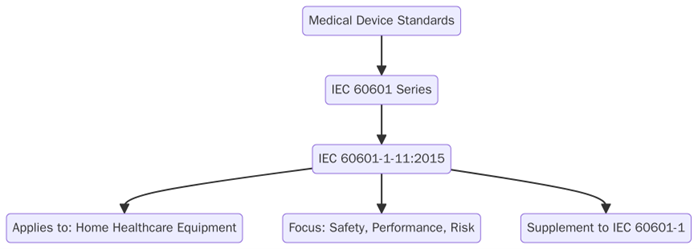
It aims to provide guidelines that enhance the safety and performance of medical electrical equipment used by patients in their homes, such as infusion pumps, ventilators, and other diagnostic or therapeutic devices.
For more information, contact us at support@pacificcert.com.
Purpose
The purpose of IEC 60601-1-11 is to ensure that medical electrical equipment used in home healthcare settings meets the necessary safety and performance standards. With the rise of home based care, including for the elderly and chronically ill patients, there is a growing need for medical devices that are safe, easy to use, and effective when operated in a non-clinical environment. This standard provides manufacturers with the guidelines needed to create medical equipment that meets both the safety expectations of healthcare providers and the functional needs of patients, while reducing the risk of harm.
Scope and Applicability
IEC 60601-1-11 applies to medical electrical equipment that is intended for use in the home healthcare environment. It is relevant for manufacturers of devices such as home ventilators, infusion pumps, home dialysis equipment, patient monitoring systems, and other devices used by patients outside of healthcare facilities. This standard is crucial for ensuring that such equipment is safe to use by patients or caregivers without direct medical supervision. It focuses on specific aspects of home healthcare, including ease of use, patient education, environmental factors like power sources, and the safety of using the devices in an uncontrolled environment. It is applicable globally and ensures that devices conform to safety standards that protect patients from harm during everyday use at home.
Some Key Definitions
- Basic Safety: Ensuring that medical devices are free from hazards under normal usage and are safe for patients, caregivers, and healthcare providers.
- Essential Performance: The necessary functional performance required for the device to achieve its intended medical purpose.
- Home Healthcare Environment: The setting where patients receive medical care at home, often with limited or no direct supervision by healthcare professionals.
- Medical Electrical Equipment: Devices that use electrical energy to perform their medical functions, including monitoring, diagnostics, or therapeutic purposes.
Clause-wise Structure
Clause Number | Title | Description |
Clause 1 | Scope | Defines the scope of the standard and specifies the medical devices and environments to which it applies. |
Clause 2 | Normative References | Lists the standards and documents referenced in IEC 60601-1-11. |
Clause 3 | Terms and Definitions | Provides key terms used in the standard to ensure clarity. |
Clause 4 | General Requirements | Specifies the general safety and performance requirements for medical devices used in home healthcare settings. |
Clause 5 | Risk Management | Outlines requirements for risk management during the design and operation of medical electrical equipment. |
Clause 6 | Electrical Safety | Specifies electrical safety requirements to minimize risks such as electric shock or fire. |
Clause 7 | Environmental Considerations | Addresses the environmental conditions for safe operation, including temperature, humidity, and dust conditions. |
Clause 8 | Usability and Patient Interaction | Focuses on the design of devices for safe use by patients or caregivers, with attention to ergonomics and ease of use. |
Clause 9 | Performance Verification | Specifies requirements for verifying that devices meet essential performance criteria during use in the home healthcare environment. |
Clause 10 | Documentation and Labelling | Requires proper documentation and labeling to ensure safe use and clear instructions for patients and caregivers. |
What are the requirements of IEC 60601-1-11?
IEC 60601-1-11 requires that medical electrical equipment used in home healthcare settings be designed to ensure safety and effectiveness during normal operation. Key requirements include:
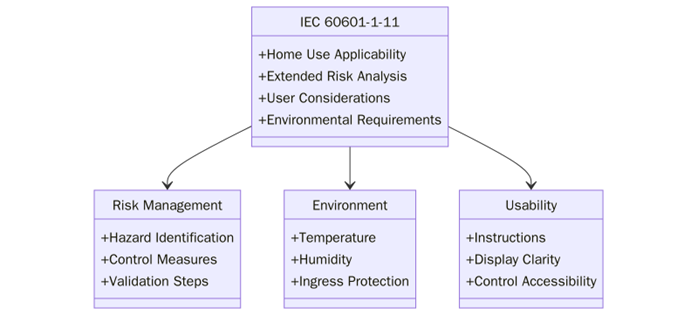
- Manufacturers must assess and mitigate potential risks associated with the device’s use in a non-clinical environment, ensuring that safety features are in place to prevent harm.
- The device must meet electrical safety standards to avoid risks of electric shock or fire. This includes ensuring proper insulation, grounding, and power management.
- Medical devices must be able to operate effectively in varied home environments, taking into account factors such as temperature, humidity, and the presence of dust.
- Devices must be designed for ease of use by patients or caregivers without technical expertise. This includes clear labels, simple controls, and minimal setup requirements.
- Devices must maintain the essential performance levels required for their intended medical function, even in the home environment.
For more information on how to comply with these requirements, contact us at support@pacificcert.com.
What are the benefits of IEC 60601-1-11 Certification?
ISO 60601-1-11 certification offers several important benefits for manufacturers of medical electrical equipment used in home healthcare settings. Below are some key advantages of certification:
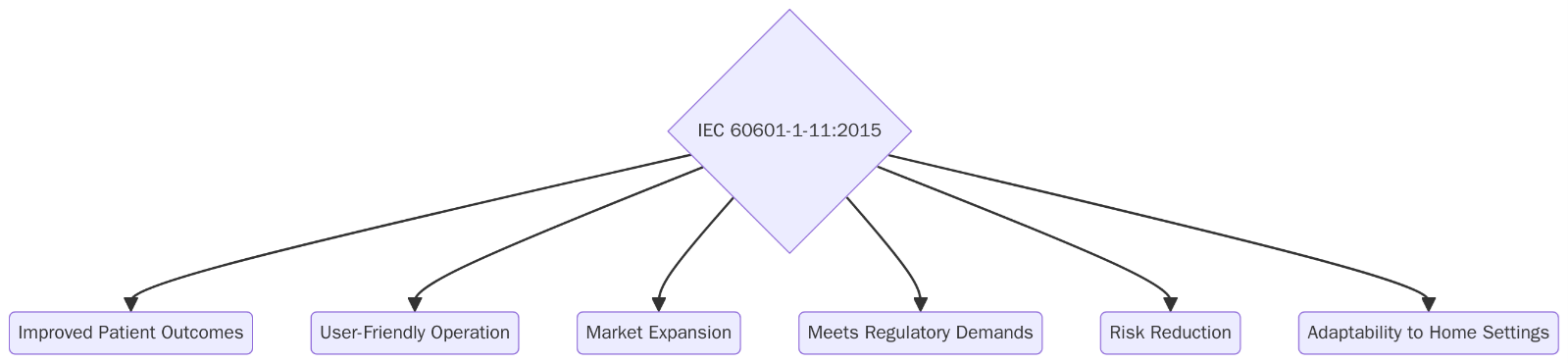
- Certification ensures that medical devices are safe for use in home healthcare settings, reducing the risk of harm to patients and caregivers.
- Compliance with IEC 60601-1-11 opens doors to global markets, as the standard is recognized internationally.
- Meeting the safety and performance requirements of IEC 60601-1-11 ensures compliance with global regulations for medical devices used outside healthcare facilities.
- Certification demonstrates a commitment to safety and quality, enhancing consumer confidence in the product.
With the growing trend toward home healthcare, especially in the context of aging populations and increased chronic diseases, the demand for safe and reliable home medical devices is expected to increase significantly in 2025. As governments and healthcare organizations emphasize the importance of home-based care, certification to IEC 60601-1-11 becomes critical for manufacturers looking to ensure their products meet both safety standards and consumer expectations. This trend drives the need for manufacturers to adapt to the unique requirements of home healthcare, ensuring their devices are both safe and effective for use by patients outside of clinical environments.
Certification process
The certification process for IEC 60601-1-11 typically follows these steps:
- Pre-Certification Assessment: A gap analysis to identify areas where your device may need improvement to meet the standard’s requirements.
- Documentation Review: A thorough review of the device’s design and documentation to ensure that it meets safety and performance requirements.
- Stage 1 Audit: Initial assessment of the risk management process, electrical safety, and usability of the device.
- Stage 2 Audit: An in-depth audit to evaluate performance under real-world home healthcare conditions, including environmental testing and usability assessments.
- Certification Decision: Certification is awarded if the device meets all the necessary requirements for safety and performance.
- Ongoing Monitoring: Recertification audits are required every three years to ensure continued compliance.
For audits and certification, contact support@pacificcert.com.
Timeline – IEC 60601-1-11 Certification
The timeline for IEC 60601-1-11 certification involves multiple phases. Initially, the pre-assessment and preparation phase typically takes 1-2 months, during which the organization identifies any gaps and adjusts the product to meet the standard. The Stage 1 audit, which primarily focuses on documentation and process review, typically takes around 1 month. The Stage 2 audit—a more thorough on-site audit to evaluate the device’s safety, performance, and usability—usually takes an additional 1-2 months. Certification issuance happens approximately 3-6 months after the completion of audits, depending on the findings and the device’s readiness for approval.
What is the cost?
The cost of IEC 60601-1-11 certification depends on factors such as the size of your organization, the complexity of your medical device, and the level of testing required. The general cost will cover the following things:
Audit Fees is the fee for the external audit process. Training Costs is the costs which associated with educating staff about the certification process and requirements. Maintenance Cost is the ongoing surveillance audits and recertification, typically required every 3 years.
For a personalized quote, contact support@pacificcert.com.
How Pacific Certifications Can Help?
At Pacific Certifications, we provide comprehensive auditing and certification services for IEC 60601-1-11. Our team of experts will guide you through the entire certification process, ensuring that your medical devices meet the necessary safety and performance standards for use in home healthcare environments. We offer:
- Stage 1 and Stage 2 audits to evaluate risk management and electrical safety.
- Objective conformity assessments aligned with IEC 60601-1-11.
- Certification issuance upon successful completion of the audit.
- Ongoing surveillance audits to ensure continued compliance.
- Support for multi-site or global operations.
For audits and certification, contact support@pacificcert.com.
Training and Courses
Various training courses are available to help organizations comply with IEC 60601-1-11, including:
- Lead Auditor Training – Equips professionals to conduct external third-party audits.
- Lead Implementer Training – For those responsible for planning and executing ISO 60601-1-11 implementation.
- Internal Auditor Training – Preparing internal auditors for certification audits.
Pacific Certifications provides accredited training programs. If your organization is looking for IEC training, our team is equipped to help you. Contact us at support@pacificcert.com.
Frequently Asked Questions (FAQs)
How long does it take to get IEC 60601-1-11 certification?
The certification process typically takes 3–6 months, depending on your organization’s preparedness and audit outcomes.
Is IEC 60601-1-11 certification mandatory for all home healthcare medical devices?
While not legally required in all jurisdictions, IEC 60601-1-11 certification is essential for ensuring the safety and effectiveness of home healthcare devices and gaining access to global markets
What are the main benefits of IEC 60601-1-11 certification?
Certification enhances credibility, ensures regulatory compliance, improves safety and performance, and opens access to global markets.
Can I apply for IEC 60601-1-11 certification without a risk management system in place?
No, a risk management system is essential for achieving certification. Devices must be evaluated for safety and performance through risk analysis.
How often do I need to renew IEC 60601-1-11 certification?
IEC 60601-1-11 certification is valid for three years, after which recertification is required.
Ready to get ISO 60601 certified?
Contact Pacific Certifications to begin your certification journey today!
Suggested Certifications –
Read more: Pacific Blogs