What are Hospitality Industry Certifications?
The hospitality industry certifications cover a wide range of services from hotels to event management firms. This industry operates through guest-facing services, backend logistics, facility management, housekeeping, food preparation, and customer interaction. It thrives on guest experience and consistent delivery of services. Each function from reservations and room service to maintenance and food safety, affects overall satisfaction and business growth.
This sector deals with high customer expectations and growing pressure for environmental and social responsibility. In this context, ISO certifications offer a reliable way to structure daily operations, improve consistency and reduce risk. They provide frameworks that support cleaner operations, safer food and strong documentation.
Whether you run a hotel or a global resort chain, ISO certifications help maintain discipline across teams and align operations with recognized standards. They also improve staff readiness during inspections and give international guests more confidence in your services.
To begin your ISO journey or schedule an audit contact us at support@pacificcert.com
Why do ISO Certifications matter for the Hospitality industry?
The hospitality business runs fast and there’s no room for error. Rooms must be clean, food must be safe, and service must be quick. Managers must train new people and keep things running with little time. Hotels must also deal with waste to guest privacy as these challenges grow with every season.
ISO hospitality industry certifications offer a way to manage them. ISO 9001 helps hotels define how tasks are done. It supports steady service. ISO 22000 is used in kitchens to improve food safety. ISO 14001 helps manage water, energy, and waste. For staff safety, ISO 45001 gives clear rules. ISO 27001 protects guest data. These systems do not add extra work. They guide staff on what to do and when to do it, which brings stability and better results.
Applicable ISO standards for Hospitality industry certifications
ISO 9001 – Quality Management Systems
Used across hotels, resorts, and service chains to define, monitor, and improve customer service delivery. It covers booking, room service, laundry, feedback handling, and facility readiness. ISO 9001 helps reduce service delays, improve cleanliness checks, and build guest trust through documented procedures.
ISO 22000 – Food Safety Management Systems
Critical for hotels, restaurants, and catering operations. It supports food preparation safety, storage, supplier controls, and hygiene practices. This standard is widely used in hospitality kitchens to reduce foodborne illness and improve confidence in meal services.
ISO 14001 – Environmental Management Systems
Helps manage energy, water usage, waste, and environmental risks. It is useful for resorts and eco-tourism units seeking cleaner operations. Hotels use this standard to track utility consumption, reduce pollution, and meet sustainability targets.
ISO 45001 – Occupational Health and Safety Management
Supports staff safety in areas like housekeeping, kitchen work, event setup, and pool maintenance. It helps reduce injury risk and manage health procedures. ISO 45001 is important for protecting both frontline and support staff.
ISO 27001 – Information Security Management Systems
Used in modern hotels and booking platforms to protect customer data, payment systems, and internal IT infrastructure. It helps prevent unauthorized access, phishing, and data breaches—critical in hospitality CRM and reservation systems.
What are the ISO requirements for Hospitality industry Certification?
To use ISO standards well, hotels must set clear steps for teams and support them with training and records. These steps do not add extra work. They bring order to what is already being done. Refer to the below points to understand the key steps involved in certification:
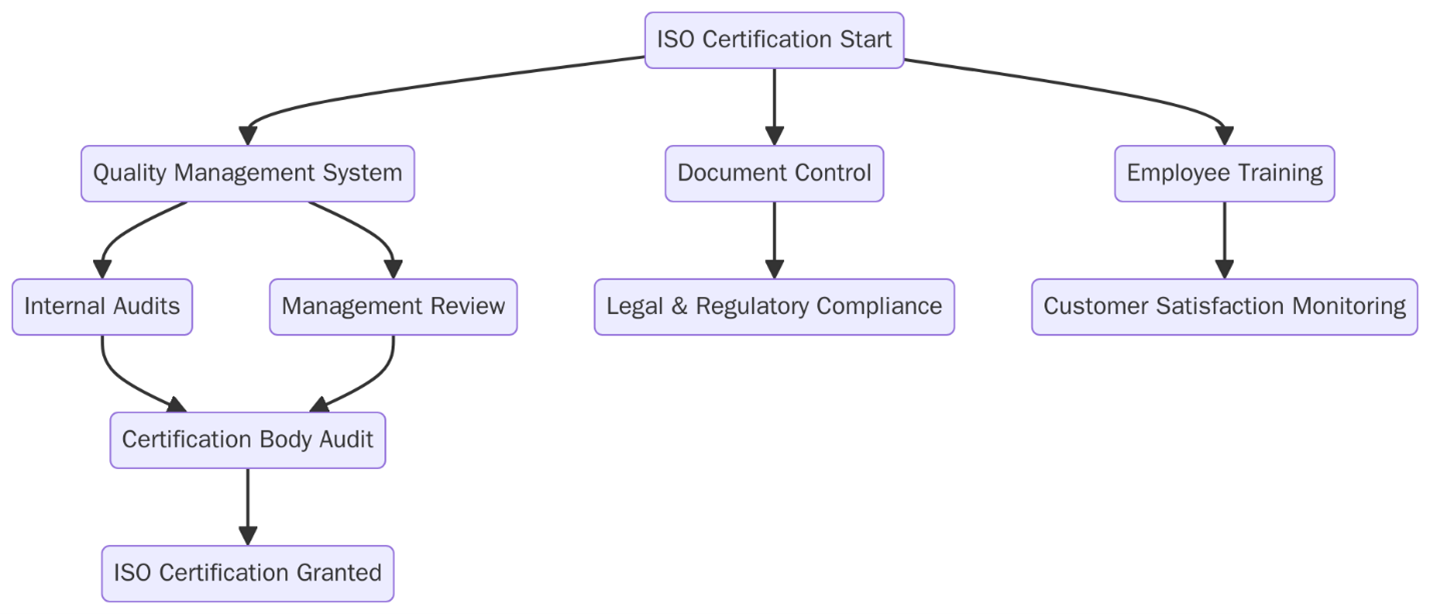
- Identify which ISO standards align with your property’s functions and risk areas
- Conduct a gap analysis to understand your current readiness
- Prepare policies for quality, food safety, environment, or information security
- Create standard operating procedures for key services and workflows
- Train teams from top management to floor staff on their roles
- Set controls for food hygiene, energy usage, safety practices, and data protection
- Develop tools for guest feedback tracking and incident management
- Perform internal audits at planned intervals
- Review management data to evaluate performance and service issues
- Undergo Stage 1 (documentation review) and Stage 2 (on-site audit) by a certification body
- Address nonconformities and maintain yearly surveillance audits to retain the certification
These steps help hotels and restaurants build clarity, reduce risks, and stay ready for guest inspections and brand audits.
What are the benefits of Hospitality industry Certifications?
Hospitality industry Certifications provides long-term value to hotels, resorts, and service teams by ensuring their systems are ready for local laws and global visitors. Refer to the below points for specific advantages that certified hospitality businesses experience:
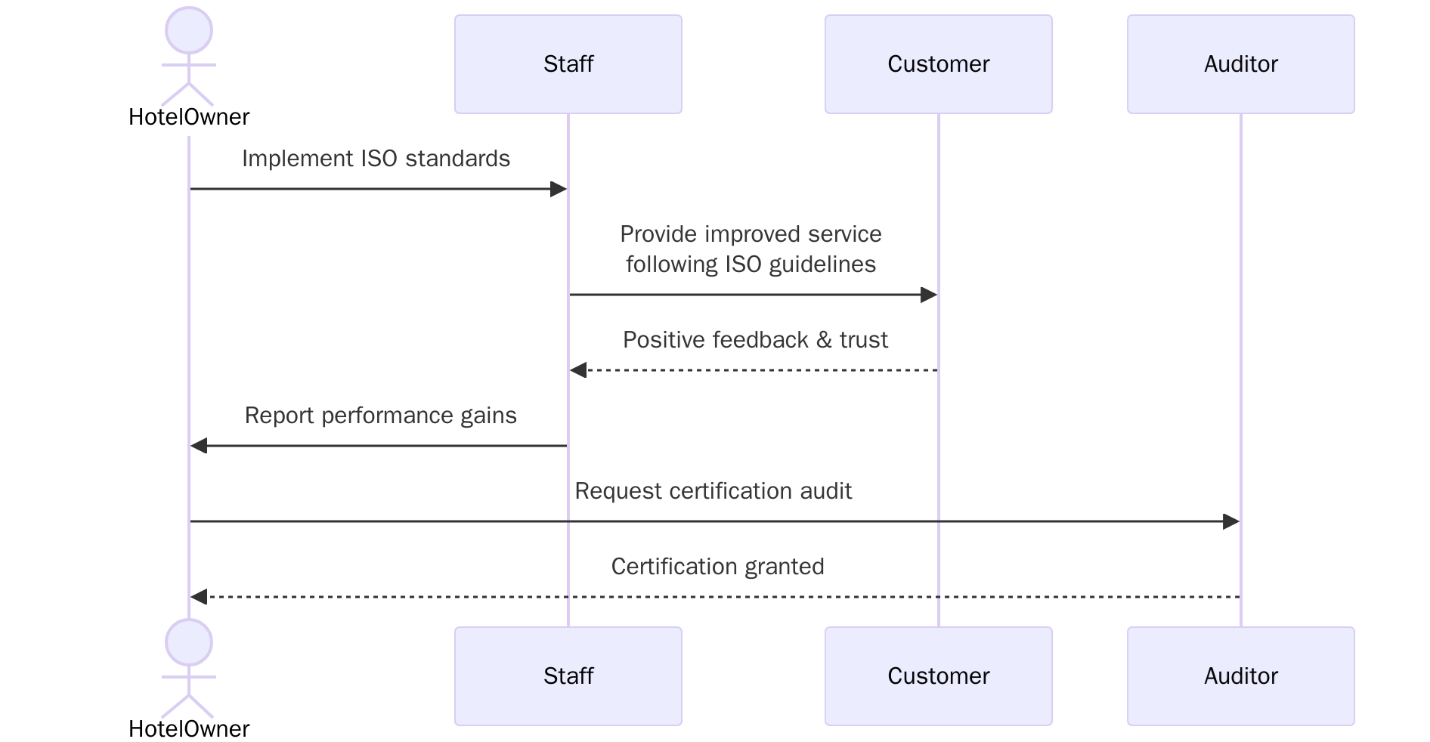
- Improved service quality in room handling, dining, and facility maintenance
- Stronger audit readiness for internal and external assessments
- Better food safety practices in restaurants, kitchens, and catering events
- Cleaner environmental operations through better water and energy use
- Safer staff working conditions across departments
- More reliable feedback resolution for guest complaints
- Higher guest satisfaction from consistent service delivery
- Documented work procedures that help during new staff training
- Lower risk of service disruptions during peak seasons
- Recognition by tour operators and travel platforms
- Improved sustainability efforts through waste and emission tracking
- More trust from guests regarding data protection and hygiene
The hotels are shifting toward digital tools, better safety and guest privacy. Contactless check-in, mobile ordering and AI-led personalization are now common. These changes bring new risks. ISO 27001 is growing as hotels protect guest data and payment systems. Wellness tourism is also rising. Food safety and clean spaces are now basic needs. ISO 22000 and ISO 9001 help hotels meet these needs every day. Environmental action is also growing. Hotels are using ISO 14001 to track utilities and meet green standards. These trends show how ISO standards are becoming part of daily hotel life, not just a badge.
ISO Trends in Hospitality Industry Certifications: 2020 vs. 2026
ISO Standard | 2020 Adoption Rate | 2026 Projected Rate | Key Growth Drivers |
ISO 9001 | 60% | 82% | Guest service focus, brand partnerships |
ISO 22000 | 35% | 68% | Food safety concerns, HACCP mandates |
ISO 14001 | 28% | 55% | Green tourism, eco-friendly hotel ratings |
Hospitality brands are linking ISO systems with CRM tools, PMS (property management systems), and energy dashboards. Many chains now demand ISO certification from franchise hotels and outsourced service vendors.
How can Pacific Certifications help?
Pacific Certifications is accredited by ABIS and offers third-party ISO audits tailored to the hospitality sector. From boutique hotels to multi-property chains, our audits are built to meet the pace and needs of hospitality teams.
We provide:
- ISO certification audits for hotels, restaurants, and resorts
- Combined audits to cover food safety, quality, and environmental aspects
- Document review support before the audit begins
- Flexible audit scheduling to reduce impact on guest operations
- Annual surveillance checks and recertification support
We do not provide consultancy services. Our focus is on impartial value-based audits.
ISO Training and Courses
To prepare your teams for certification and internal monitoring, we offer:
- Internal Auditor Training – Helps QA teams conduct in-house reviews
- Lead Auditor Training – Prepares professionals to manage full audit cycles
- Awareness and Implementation Workshops – Useful for kitchen leads, front desk managers, and housekeeping heads
Pacific Certifications provides accredited training programs. If your organization is looking for ISO 9001, ISO 14001, ISO 22000 training, our team is equipped to help you. Contact us at support@pacificcert.com.
FAQs
What is ISO certification for the hospitality industry?
ISO certification for hospitality means a hotel, resort, restaurant or travel service runs its management systems according to international standards for quality, safety, environment, food safety or information security.
Which ISO standards are most common for hotels and restaurants?
Typical choices are ISO 9001 for quality, ISO 14001 for environment, ISO 45001 for health and safety, ISO 22000 for food safety, ISO 27001 for guest data security and sometimes ISO 50001 for energy use.
Why should a hospitality business consider ISO certification?
ISO certification helps keep service consistent, reduce mistakes and incidents, improve guest trust and support tenders or brand partnerships where documented systems are required.
Is ISO certification mandatory for hotels and hospitality companies?
In most countries ISO certification is not legally mandatory, but many chains, tour operators and corporate clients prefer or request it during vendor approval.
How does ISO 9001 help hotels and resorts?
ISO 9001 helps define how bookings, check in, housekeeping, maintenance and complaint handling should work so that guests receive steady service at every stay.
What are the main steps to get ISO certified in hospitality?
You choose the standard, review current practices, create or update procedures and records, train staff, run internal audits and then undergo an external audit from an accredited certification body.
How long does ISO certification take for a hotel or restaurant?
For most small or mid sized hospitality businesses the process usually takes a few months from gap assessment to final audit, depending on how much needs to change in day to day work.
How much does ISO certification cost in the hospitality sector?
Cost depends on the size and number of locations, the standards selected and audit days required, plus any training or consulting the business chooses to buy.
Does ISO certification improve guest ratings and reviews?
ISO alone does not guarantee higher ratings, but clearer processes for cleanliness, response time and complaint handling usually support better guest experience and more stable reviews.
Can one ISO certification cover a group of hotels or outlets?
Yes, many brands use a single multi site certificate for several hotels or restaurants, as long as the same management system is used and each site is included in the audit sample.
Ready to get ISO certified?
Contact Pacific Certifications to begin your certification journey today!
Suggested Certifications –
Read more: Pacific Blogs