-Applicable ISO Standards, Requirements & Benefits
Introduction
In today’s fast-paced technological world, ensuring the quality, security, and efficiency of Business Analytics & Enterprise Software Publishing is paramount. As an ABIS-accredited certification body, Pacific Certifications recognizes the challenges organizations face in delivering robust and reliable software solutions. That’s where ISO Certifications come into play. These internationally recognized standards serve as a benchmark for business excellence, offering numerous advantages such as enhanced credibility, risk mitigation, and streamlined operations.
Why ISO Certification Matters for the Tech Industry
With rising concerns about data security, compliance, software quality, and customer satisfaction, ISO certifications are no longer optional—they’re a necessity. Here’s why:
- Builds customer trust and demonstrates global best practices.
- Opens doors to international markets and large contracts.
- Improves internal processes and ensures consistency.
- Protects intellectual property and sensitive data.
- Enhances regulatory compliance, especially for companies dealing with financial or healthcare data.
Applicable ISO Standards for the Industry
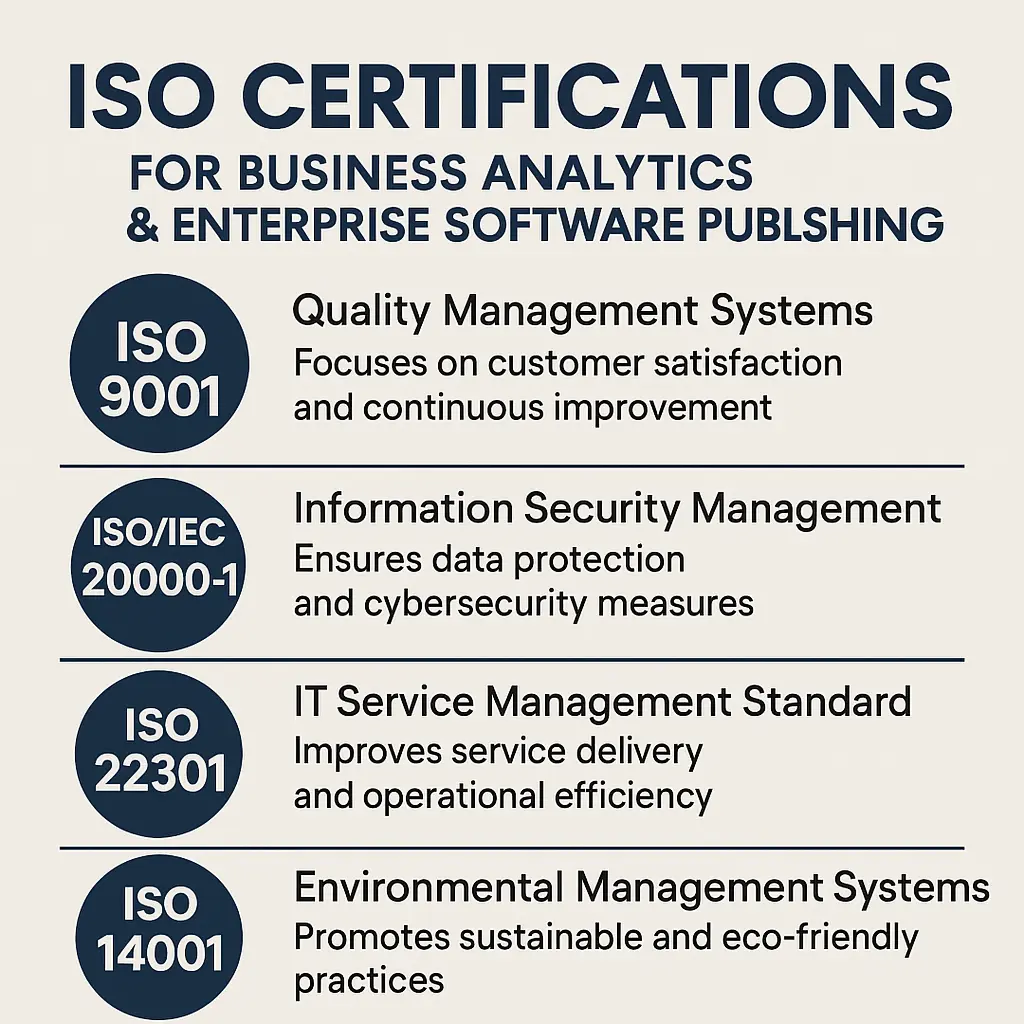
ISO 9001: Quality Management Systems
For a company involved in Business Analytics or Software Publishing, achieving ISO 9001 certification is an endorsement of the quality management system in place. This standard promotes customer satisfaction, ensuring that products meet both customer and regulatory requirements.
ISO 27001: Information Security Management
Given that Business Analytics & Enterprise Software Publishing often involves handling sensitive data, ISO 27001 certification is almost a necessity. This standard focuses on information security management, and safeguarding your company’s data integrity.
ISO 14001: Environmental Management
In an era of environmental awareness, ISO 14001 has garnered significance. It helps companies reduce their environmental impact and adhere to applicable laws and regulations.
ISO 45001: Occupational Health and Safety
This standard is crucial for any company, but especially for those in industries where data centers and development environments pose particular risks. ISO 45001 ensures a safe and healthy workplace.
Who Needs These Certifications?
ISO certifications are valuable for:
- Business Intelligence (BI) Tool Developers
- Enterprise Resource Planning (ERP) Software Companies
- Customer Relationship Management (CRM) Platform Providers
- Data Analytics SaaS Startups
- AI/ML Model Publishers
- Cloud-Based Dashboard Providers
Whether you’re a startup scaling up or a multinational enterprise, these certifications provide structured growth and compliance.
Requirements for ISO Certification
Gap Analysis
Before you can even apply for an ISO certification, a gap analysis is essential. This assesses your existing management system against the chosen ISO standard’s requirements, identifying areas for improvement.
Documentation
Your organization will need to create a documented management system that is aligned with the ISO standard you wish to pursue. This could include procedures, work instructions, and forms that ensure compliance.
Internal Audits
Once the documentation is in place, internal audits are conducted to verify that the management system complies with the ISO standard.
Management Review
Senior management must review the internal audit findings, implementing necessary adjustments and confirming the system’s effectiveness.
External Audits
After passing internal audits and management review, an external audit by a certified body like Pacific Certifications is the final step. Successful completion leads to ISO certification.
Benefits of ISO Certification
Competitive Advantage
Certification proves to clients and stakeholders that your business adheres to industry-leading standards, thereby building trust and potentially increasing market share.
Risk Management
For example, ISO 27001 helps identify and mitigate security vulnerabilities, thereby reducing the likelihood of data breaches. This not only prevents financial losses but also protects your brand image.
Regulatory Compliance
Most ISO standards are in line with legal requirements, making it easier for companies to comply with various regulations.
Improved Operational Efficiency
ISO 9001, for example, focuses on continuous improvement, which can lead to cost savings through increased operational efficiency.
Choosing the Right Certification Body
When selecting an ISO certification provider in the US, ensure they are:
- Accredited by bodies like ANAB or IAS
- Experienced in the tech/software industry
- Transparent in pricing and audit process
Pacific Certifications is a trusted name in the field, offering reliable ISO certification services tailored for software and tech companies in the US and globally.
Conclusion
The rise of business analytics platforms and enterprise-grade software has made ISO certification a strategic imperative. It is no longer about just selling solutions—it’s about delivering secure, high-quality, and compliant platforms.
For businesses in the US looking to scale, ISO certifications by Pacific Certifications offer a globally recognized framework for success, security, and sustainability.
As a reputable authority in the field, accredited by ABIS, Pacific Certifications underscores the significance of ISO certifications in Business Analytics & Enterprise Software Publishing in the US. These standards are not just badges to add to your website; they are a testament to a company’s commitment to quality, security, and continuous improvement. Contact Now for enquiries.
People Also Ask
The most relevant ISO certifications for software companies in the US include ISO 9001 for quality management, ISO/IEC 27001 for information security, and ISO/IEC 20000 for IT service management. The choice depends on your company’s operations, data handling, and customer base.
No, ISO certification is not legally mandatory, but it is highly recommended. It boosts customer confidence, improves internal processes, and can help your analytics company stand out in competitive markets.
The cost of ISO certification varies depending on:
The number of employees
The ISO standard selected
The complexity of your processes
The certification body you choose
On average, it takes 3 to 6 months to become ISO certified. This depends on your organization’s readiness, resources, and the scope of certification.
ISO/IEC 27017 and ISO/IEC 27018 are ideal for cloud-based platforms, along with ISO/IEC 27001. These standards ensure your cloud infrastructure is secure and compliant with global privacy regulations.
Yes, startups can and should pursue ISO certification. It demonstrates a commitment to quality, data security, and scalability—especially important when seeking funding or partnerships with enterprise clients.
What are the benefits of ISO 27001 for data analytics companies?
ISO 27001 helps data analytics companies:
Secure sensitive data
Comply with privacy laws (like GDPR, HIPAA)
Protect intellectual property
Build client trust
Is ISO 9001 relevant for software publishing companies?
Absolutely. ISO 9001 helps software publishing companies implement a quality management system (QMS), ensuring consistent delivery, better client satisfaction, and continuous improvement.
ISO certifications are typically valid for three years, but certified organizations must undergo annual surveillance audits to maintain compliance.
What is the difference between ISO/IEC 20000 and ISO/IEC 27001?
ISO/IEC 20000 focuses on IT service management, ensuring efficient service delivery and customer support.
ISO/IEC 27001 focuses on information security, protecting data from cyber threats and breaches.
Both are valuable and can be implemented together for comprehensive coverage.