Introduction
Kuwait’s economy runs on oil and gas, refineries and petrochemicals, power and water utilities, construction and EPC projects, ports and logistics corridors, steel and manufacturing, banks and financial services and a growing base of IT, cloud and shared-service operations. As lenders, joint-venture partners and state-owned buyers tighten scorecards, ISO certification Kuwait is becoming a baseline expectation around quality, HSE, environment, energy performance and information security, especially in energy and infrastructure projects.
For ISO certification oil gas companies Kuwait, refineries, petrochemical plants and upstream operators, ISO 9001, ISO 14001, ISO 45001 and ISO 50001 help keep a quality management system petrochemical Kuwait steady, control spills and emissions, support HSE certification oil gas Kuwait and show measured energy performance. ISO 9001 certification manufacturing companies Kuwait, ISO certification steel manufacturing Kuwait and ISO certification pharmaceutical companies Kuwait support export approvals, product consistency and process control across factories and labs. On the services side, ISO 27001 certification banks Kuwait, information security certification Kuwait and ISO 27001 IT companies Kuwait are now central for cyber-risk, privacy and uptime across financial and technology platforms.
For construction and infrastructure, ISO certification construction companies Kuwait, ISO 45001 workplace safety Kuwait and ISO certification EPC companies Kuwait give EPC and contractors a structured way to manage site risks, subcontractors and deadlines on large public and industrial projects. In this context, organizations looking to get ISO certified Kuwait want affordable ISO certification Kuwait options with clear audit time and scope, whether they work with ISO certification consulting Kuwait or go directly to an accredited certification body. Share your scope, sites and standards set in Kuwait with Pacific Certifications and we will help you achieve ISO certified in Kuwait by mapping accreditation coverage, recommended audit days and Stage 1 and Stage 2 windows that match shutdowns, export seasons and project milestones.
Economic context and industry overview
Over the coming years, Kuwait will continue building around its strengths in oil and gas production, downstream refining and petrochemicals while investing in new power, desalination, housing, transport and logistics projects. Planned and ongoing investments in upstream fields, gas handling, refineries and petrochemical complexes mean ISO 9001 oil refining companies Kuwait and ISO certification upstream oil companies Kuwait will stay in focus for international partners, lenders and national stakeholders.
At the same time, petrochemical clusters, steel and manufacturing, construction and urban development, ports and logistics, pharmaceutical and healthcare supply chains and IT and financial services are all under pressure to show stronger control of HSE, environment, energy and cyber-risks. Across these sectors, ISO 14001 environmental management Kuwait and ISO 50001 energy management Kuwait show that companies manage emissions and energy use deliberately, not by chance. At the same time, ISO 27001 certification banks Kuwait and ISO 27001 IT companies Kuwait strengthen trust in how organizations handle data and operate digital services. Buyers and regulators are asking for clear, auditable systems instead of isolated certificates or policy statements.
Why ISO certifications matter in Kuwait?
Large energy companies, ministries, regulators, industrial buyers and international lenders want certified quality management systems with evidence-backed systems, not just written procedures. ISO certification in Kuwait helps teams pass vendor reviews faster, keep projects and operations steady and reduce incidents that lead to downtime, fines or lost cargo. For ISO certification oil gas companies Kuwait and ISO 45001 certification petroleum industry Kuwait, integrated ISO 9001, ISO 14001 and ISO 45001 systems connect risk assessment, maintenance, operations and contractor work under one auditable framework.
In petrochemicals and heavy manufacturing, ISO certification petrochemical companies Kuwait and ISO certification steel manufacturing Kuwait support consistent batches, safe processes and documented controls for emissions, waste and energy. ISO certification construction companies Kuwait and ISO 9001 contractors Kuwait help EPC firms and contractors prove that they run quality, HSE and schedule controls from tender through commissioning. Banks, fintech and IT firms rely on ISO 27001 certification banks Kuwait and information security certification Kuwait to reassure customers, partners and regulators that they apply defined controls to protect data, networks and platforms, backed by audits and periodic testing.
Popular ISO standards in Kuwait
| Industry focus | Commonly requested standards | Why they matter |
| Oil and gas, upstream, refineries and fuel logistics | ISO 9001, ISO 14001, ISO 45001, ISO 50001, ISO 22301 | Process control, HSE, emissions, energy management, continuity |
| Petrochemical, chemical and plastic production | ISO 9001, ISO 14001, ISO 45001, ISO 50001 | Quality, environment, worker safety, energy use at integrated plants |
| Steel, fabrication and general manufacturing | ISO 9001, ISO 14001, ISO 45001 | Product quality, site safety, environmental impact in workshops and mills |
| Construction, EPC and infrastructure | ISO 9001, ISO 14001, ISO 45001, ISO 50001 | Project quality, workplace safety, environmental controls, energy-consuming sites |
| Pharmaceutical and life sciences | ISO 9001, ISO 14001, ISO 45001, ISO 50001, ISO 13485 | Product and facility quality, environment, worker safety, energy-sensitive operations |
| Banks, fintech and IT or cloud services | ISO/IEC 27001, ISO 22301, ISO/IEC 20000-1 | Information security, service continuity, IT service management |
| Ports, logistics, warehousing and transport | ISO 9001, ISO 14001, ISO 45001, ISO 22301, ISO 28000 | Turnaround discipline, yard safety, environment, continuity, chain security |
Certification process in Kuwait
Preparation should start from how work runs today in fields, plants, depots, construction sites, ports, offices and data rooms. The aim is to make your system auditable without forcing people to maintain two different ways of working. Below are the steps to consider:
- List products, services, sites, headcount and high-risk processes so the scope is clear and audit time is realistic for single-site or multi-site programs.
- Map processes end to end so handoffs, records and responsibilities are visible from suppliers through to customers, regulators and partners.
- Set policy and measurable objectives linked to customer needs, legal requirements, HSE topics, food safety, cybersecurity, energy use and reliability.
- Build or update controlled procedures, work instructions and forms so they describe how operators, technicians, engineers, supervisors and coordinators actually work.
- Assemble evidence packs for operations, maintenance, HSE, labs, IT, logistics and support teams so key records are easy to find during audits.
- Run internal audits that focus on high-risk tasks, contractor work, outsourced processes and critical suppliers, then track nonconformities and corrective actions to closure.
- Hold management review with KPIs, audit results, incidents or complaints, resource constraints, legal or contractual changes and agreed actions with owners and due dates.
- Schedule Stage 1 for readiness checks and Stage 2 for implementation verification, align multi-site sampling to risk and location and agree how much can be done on site and how much remote.
- Keep permits, licenses, inspection reports, calibration certificates, monitoring data and key contracts organized so auditors can test compliance without delay.
What are the requirements of ISO certifications in Kuwait?
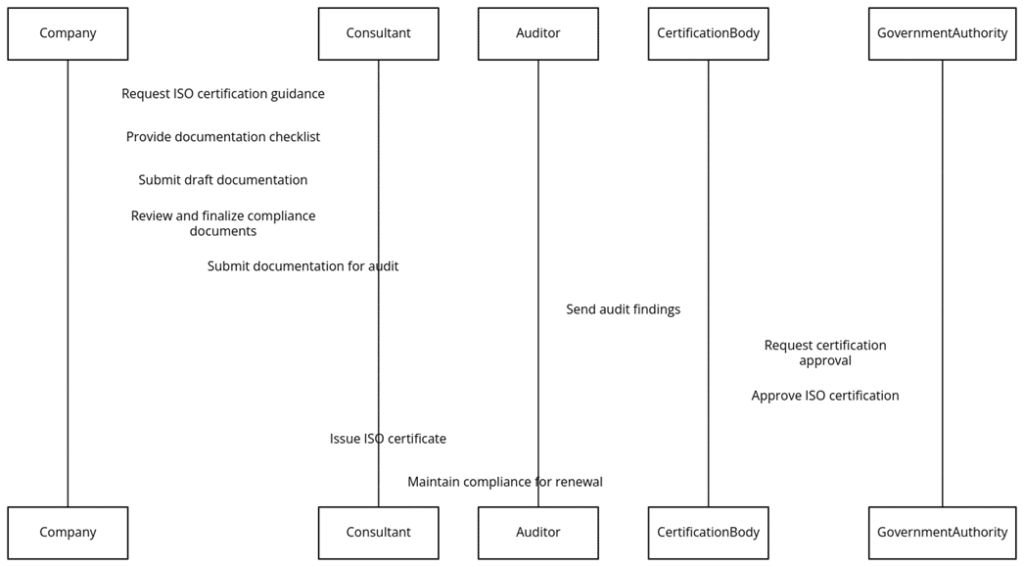
Implementation should mirror work in upstream oil and gas assets, refineries and petrochemical plants, power and water utilities, construction and EPC projects, steel and manufacturing sites, warehouses and ports, banks and IT or cloud operations so records stand up in audits, inspections and buyer reviews. Below are the key requirements:
- Scope aligned to products or services, processes and sites, including multi-site and multi-business-unit programs and contractor yards where critical work is done.
- Controlled documents and records that match actual practice, with clear version control, access rules and change history so users can rely on current information.
- Risk assessment with operational controls for real hazards and issues, such as process safety, confined spaces, lifting operations, contractor work, HACCP, environmental aspects, cyber threats, privacy, energy use and change management.
- Competence matrices and training records for process owners and high-risk roles in operations, maintenance, HSE, engineering, logistics, IT, security and customer-facing teams.
- Internal audits and management reviews carried out on schedule, with nonconformities, corrective actions and decisions tracked and followed up to prevent repeat issues.
Tip: Align controls with Kuwaiti oil and gas, HSE, environment, labor, customs, financial and telecom rules, as well as lender covenants and major buyer codes of conduct wherever relevant.
What are the benefits of ISO certifications in Kuwait?
Certification should be used to shorten vendor approval cycles, reassure lenders and partners and keep work steady despite project pressure, market shifts and complex supply chains. Below are the key benefits:
- Faster prequalification in buyer portals and public procurement for oil and gas, EPC, industrial projects, logistics, manufacturing, healthcare, banking and services.
- Fewer incidents, defects and stoppages on sites, lines, platforms and transport routes, which reduces rework, downtime, cargo losses and claims.
- Clear roles and skill paths for operators, technicians, engineers, HSE staff, controllers and managers across shifts, sites and business units.
- Traceable data for investigations, warranty and cargo claims, insurance discussions, ESG summaries and due diligence by investors, lenders and partners.
- Stronger supplier and contractor control through audits, KPIs and corrective actions across transport fleets, maintenance providers, fabricators, cleaners, waste handlers, utilities, IT and cloud providers.
- Measured gains in energy use, waste, emissions, uptime and yield at plants, terminals, warehouses, workshops, offices and data centers through ISO 50001 energy management Kuwait and related programs.
Continued investment in upstream and downstream projects, petrochemicals, power and water, housing and transport corridors is expected to keep demand high for ISO 9001, ISO 14001 and ISO 45001 in large capital projects and operations. Energy efficiency and flare reduction programs are also pushing more users toward ISO 50001 in plants, utilities and energy-intensive sites.
Digitalization across banks, payments, telecom, IT, cloud, shared services and government platforms is raising interest in ISO 27001 certification banks Kuwait, ISO 27001 IT companies Kuwait and ISO 22301 for continuity, while logistics, warehousing and port operators look closely at ISO 9001, ISO 14001, ISO 45001 and ISO 28000 for chain security. Affordable ISO certification Kuwait and right-sized audit plans for SMEs are becoming more important as smaller contractors, fabricators and service firms join supply chains for major projects.
Challenges faced in Kuwait
Local conditions and project realities can make ISO certification implementation difficult if teams are not supported. Common challenges include:
- Budgeting time and funds for certification and system upkeep while managing project cycles, shutdowns, turnaround plans and short-term production targets.
- Treating ISO as paperwork in some teams, which slows adoption and leaves gaps between documented procedures and real work in plants, sites and control rooms.
- Shortage of trained internal auditors and process owners who can read clauses and link them to practical risks in oil and gas, construction, logistics and IT operations.
- Gaps in document control, internal audits, corrective action discipline and record keeping across multi-site, multi-vendor and joint-venture networks.
- Complex supply chains and contractor layers that make it harder to gather evidence, keep controls consistent from tier 1 to tier 3 and maintain HSE and information security expectations.
What is the cost of certification in Kuwait?
ISO certification cost in Kuwait depends on headcount and risk, the number and spread of sites, your standards set, whether the program is single-standard or integrated such as ISO 9001, ISO 14001 and ISO 45001, sampling depth for plants, terminals, depots, warehouses, clinics, offices or data centers and the mix between on-site and remote audit work. Integrated systems for oil and gas, petrochemicals, EPC, utilities and ports often need more audit days than a single ISO 9001 certification manufacturing companies Kuwait scope but can still save time compared to separate audits.
For small to medium enterprises in Kuwait, ISO 9001 certification cost usually depends more on employee numbers, process complexity and single-site versus multi-site scope than on revenue alone. The same logic applies when adding ISO 14001, ISO 45001, ISO 22000, ISO/IEC 27001 or ISO 50001, whether the focus is ISO certification construction companies Kuwait, ISO certification petrochemical companies Kuwait or ISO 27001 certification banks Kuwait. Pacific Certifications works to provide affordable ISO certification Kuwait with transparent pricing and free cost estimates, so cost drivers are clear to leadership and finance teams.
Your proposal from Pacific Certifications will itemize Stage 1, Stage 2 and surveillance days, explain on-site versus remote activities and highlight any multi-site efficiencies so budgeting and scheduling are easier. For a personalized ISO certification cost estimate for your operations in Kuwait, contact support@pacificcert.com and request an ISO 9001 certification cost estimate along with any other standards in scope.
What is the timeline for certification in Kuwait?
Timelines depend on document and record readiness, the speed of closing Stage 1 findings, single versus multi-site scope and whether the program is single-standard or integrated. Planning around shutdowns, project milestones, export seasons, fiscal year end and key customer audits also shapes the schedule.
A prepared single site, such as one plant, depot, office, lab, data center or hospital, can often move from application to decision within one audit cycle. Multi-site or integrated programs, including combined ISO 9001, ISO 14001 and ISO 45001 certification for oil and gas, petrochemical, EPC or logistics clusters, need more sampling and planning time, especially where sites sit in different regions, industrial areas or joint-venture structures.
Important standards often requested by buyers in Kuwait
| Standard | Typical drivers in Kuwait |
| ISO 9001 | Supplier approval for oil and gas, refining, petrochemicals, EPC, manufacturing and services |
| ISO 14001 and ISO 45001 | HSE control for plants, projects, depots, terminals, workshops and field teams |
| ISO 22000 | HACCP and traceability for catering, agrifood, hospitality and cold chain |
| ISO/IEC 27001 and ISO 22301 | Security and continuity for banks, fintech, telecom, IT and cloud platforms |
| ISO 50001 | Energy performance for plants, utilities, refineries and energy-intensive facilities |
| ISO/IEC 17025 and ISO 15189 | Competence and method control for industrial, calibration and medical laboratories |
How Pacific Certifications can help?
Pacific Certifications provides ABIS-accredited ISO certification and audit services for oil and gas, LNG and refining, petrochemical and chemical plants, steel and manufacturing, construction and EPC, ports and logistics, warehouses and depots, agrifood and cold chain, pharmaceutical and healthcare, banks and fintech, telecom, IT and cloud service organizations across Kuwait. Our team is used to field and plant conditions, construction sites and depots, control rooms and data rooms and clinical and lab environments, as well as buyer and lender expectations in large projects and long-term contracts. Our accredited certificates are accepted by procurement portals and international customers and we are recognized by ABIS.
Request your free ISO certification cost estimate Kuwait for ISO 9001, ISO 14001, ISO 45001, ISO 22000, ISO/IEC 27001, ISO 50001 or integrated audit plan. We will help you map Stage 1 and Stage 2 timelines and evidence needs for your organization in Kuwait City and other industrial areas. Contact us at support@pacificcert.com.
Accredited training programs
Pacific Certifications provides accredited training programs in Kuwait for ISO 9001, ISO 14001, ISO 45001, ISO 22000, ISO/IEC 27001, ISO 22301 and ISO/IEC 20000-1.
- Lead auditor training: for professionals who audit these systems in oil and gas, construction, manufacturing, logistics, financial services, healthcare and IT organizations in Kuwait.
- Lead implementer training: for personnel who build or improve systems in plants, terminals, warehouses, hospitals, labs, utilities, banks, telecom and digital platforms.
These programs run online or on site, depending on client needs, under ISO/IEC 17024 for personnel certification and can support organizations that prefer to rely less on professional ISO certification consultants Kuwait by strengthening internal capability.
FAQs
How long does ISO certification take in Kuwait?
A prepared single site can often complete initial certification within one audit cycle, while multi-site or integrated programs take longer.
Which industries in Kuwait need ISO certification most?
Oil and gas, petrochemicals, construction and EPC, manufacturing, logistics, healthcare, banks and IT or cloud services see the highest demand.
Can ISO audits in Kuwait be partly remote?
Yes, many interviews and record checks can be done remotely, with focused on-site visits for higher-risk areas.
What ISO standards suit oil and gas and petrochemical companies in Kuwait?
ISO 9001, ISO 14001, ISO 45001, ISO 50001 and in some cases ISO 22301 and ISO 28000 fit typical risks and buyer expectations.
Which standards fit banks, fintech and IT companies in Kuwait?
ISO/IEC 27001 for information security with ISO 22301 for continuity and ISO/IEC 20000-1 for IT service quality.
What standards are common in logistics and ports in Kuwait?
ISO 9001, ISO 14001, ISO 45001, ISO 22301 and ISO 28000 for chain security and resilience.
Do you work with SMEs in Kuwait?
Yes, audit time and sampling are right sized for SMEs while accreditation rules and impartiality are maintained.
What should we prepare before Stage 1 in Kuwait?
Scope, process maps, risk records, policy, objectives, competence records, controlled procedures and recent internal audit and management review results.
Are ISO certificates from Kuwait accepted by regional and global buyers?
Accredited ISO certificates are widely accepted, subject to each buyer’s supplier approval process.
How do we maintain ISO certification in Kuwait?
Run internal audits on schedule, close nonconformities, hold management reviews and complete surveillance and recertification audits on time.
Contact Us
If you need support with ISO certification in Kuwait, contact us at support@pacificcert.com.
Read More at: Blogs by Pacific Certifications