Introduction
Mongolia’s economy is shaped by mining and mineral exports, agriculture and livestock, agrifood and cold chain, construction and public works, transport corridors, banking and remittances, telecom and a modest but growing tourism and digital-services base. ISO certification in Mongolia gives these sectors a way to show that quality, safety, environment, information security and food safety are controlled and checked, not just promised.
For mining companies, fuel and logistics operators, agriculture companies, food processors, export warehouses, hospitals and labs, banks and payment platforms, IT and cloud providers, ISO 9001 certification requirements in Mongolia and integrated ISO 9001, ISO 14001 and ISO 45001 occupational safety certification in Mongolia are practical tools to move through buyer approval faster and hold margins when contracts are tight. ISO certification for tourism businesses in Mongolia and ISO 22000 food safety certification in Mongolia support hotels, camps, tour operators and catering teams that depend on repeat visitors and international partners.
Share your scope and sites in Mongolia with Pacific Certifications and we will map accreditation coverage, recommended audit days and Stage 1 and Stage 2 audit windows that match your project cycle, export seasons and any integrated ISO certification plans. We provide affordable ISO certification services in Mongolia with clear proposals, no hidden items and professional ISO certification services in Mongolia for both single-site and multi-site scopes.
Economic context and industry overview
Mongolia combines a resource-driven export base with a large rural population and a small but expanding services layer. Copper, coal and gold projects, together with fuel logistics and related infrastructure, anchor foreign-currency earnings, while agriculture and livestock support food security and supply raw materials for meat, dairy and wool processing. As transport links deepen with neighboring markets and more export companies in Mongolia target regional buyers, questions around quality, safety, emissions, energy use and data handling are becoming more frequent in tenders and due diligence.
Beyond mining and agriculture, construction, urban infrastructure and warehousing are growing as new housing, roads, depots and power assets are built. Tourism and hospitality are gradually expanding around nature, culture and adventure routes, which raises expectations on service quality, safety and hygiene in lodges, camps, hotels and food outlets. Across these sectors, buyers and regulators expect clearer proof of how risks are controlled, which is where ISO certification in Mongolia provides a structured language and audit trail.
Why ISO certifications matter in Mongolia?
Large buyers, lenders and public bodies do not want only policy statements; they expect traceable records and repeatable routines. ISO management systems help Mongolian teams move faster through supplier registration, vendor onboarding and export checks, keep operations steady across seasons and price swings and reduce incidents, rework and disputes. These ISO certification benefits for businesses in Mongolia include easier access to finance, smoother buyer visits and more predictable performance on high-risk sites.
ISO 9001 supports process control, supplier oversight and change management for mines, contractors, workshops, agrifood plants, warehouses, depots and service centres, as well as back-office and shared-service work, ISO 14001 environmental certification Mongolia supports structured control of emissions, waste and land or water impact around pits, plants and terminals. ISO 45001 occupational safety certification Mongolia underpins hazard identification, safe-work routines and permits on active sites, where heavy equipment, confined spaces and remote locations make discipline vital.
Popular ISO standards in Mongolia
Below is a snapshot of top ISO standards in Mongolia and how they connect to key sectors and export demands.
| Industry focus | Commonly requested standards | Why they matter |
| Mining, fuel logistics, heavy industry | ISO 9001, ISO 14001, ISO 45001, ISO 50001, ISO 22301 | Process control, worker safety, emissions, energy use, continuity |
| Agriculture, meat and dairy, agrifood and retail | ISO 9001, ISO 22000, ISO 14001 | Consistent product, food safety, hygiene, waste and environmental control |
| Construction, public works, infrastructure projects | ISO 9001, ISO 14001, ISO 45001 | Work quality, site safety, environmental aspects on roads, buildings and sites |
| Transport, warehousing, export logistics | ISO 9001, ISO 14001, ISO 45001, ISO 28000 | Turnaround discipline, yard safety, chain security, export documentation |
| Banks, fintech, telecom, IT and cloud | ISO 9001, ISO/IEC 27001, ISO 22301, ISO/IEC 20000-1 | Service quality, data protection, continuity, IT-service management |
| Tourism, hotels, camps, travel and adventure | ISO 9001, ISO 22000, ISO 21101, ISO 14001 | Service quality, food safety, adventure-tour safety, environmental care |
Certification process in Mongolia
The ISO certification process in Mongolia should start from how work actually runs today, not from a blank template. The aim is to make your system auditable without creating a second, paper-only version of reality. Below is a practical ISO certification audit process in Mongolia that many organizations follow when they ask how to get ISO certified in Mongolia:
- Define scope and context: List products, services, sites, headcount and high-risk processes so the scope is clear and audit time is realistic for mines, plants, warehouses, offices and camps.
- Map processes end-to-end: Draw process flows from input to output so handoffs, records and responsibilities are clear across operations, maintenance, logistics, support and management.
- Set policy and objectives: Approve a policy and measurable objectives linked to customer needs, legal and permit conditions, safety topics, environmental aspects, information security and energy use.
- Hold management review: Review KPIs, audit results, incidents, complaints, resource issues, risks and opportunities and planned changes and record decisions and follow-up actions.
- Schedule Stage 1 and Stage 2: Agree dates for Stage 1 (readiness review) and Stage 2 (implementation check), decide which parts are on-site and which can be remote and align multi-site sampling to risk.
- Close findings and certify: Respond to any nonconformities, submit action evidence and once the certification body is satisfied, receive your ISO certificate and move into the surveillance cycle.
What are the requirements of ISO certifications in Mongolia?
An ISO certification requirements checklist for Mongolia should mirror how work actually runs in pits and plants, workshops and depots, agrifood lines and cold rooms, clinics and labs, call centres and data rooms. Below are the key ISO certification documentation requirements Mongolia-based organizations usually need to cover:
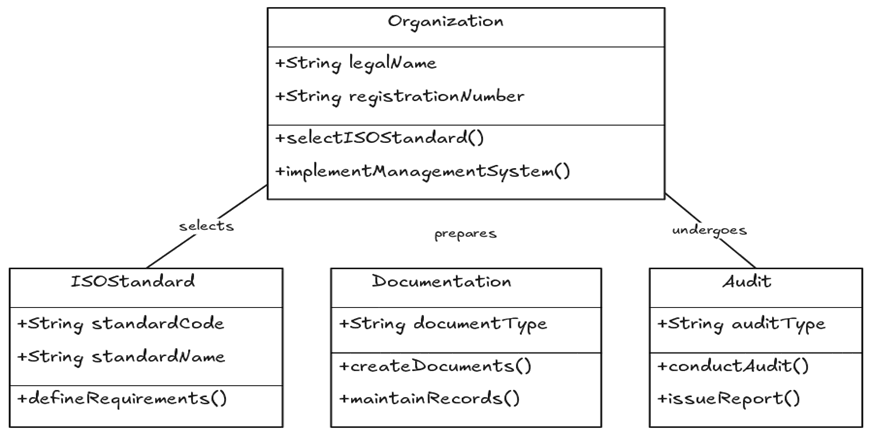
- Clear scope and context aligned to products or services, processes, locations and interested parties, including multi-site programs and contractor yards.
- Controlled documents and records that match daily practice, with clear version control, approval, access rules and change logs that users understand and follow.
- Risk assessment and controls that cover real hazards and issues such as work at height, mobile equipment, chemicals, noise, dust, HACCP points, cyber-risks, privacy and energy use.
- Competence and training records that show who is trained for critical roles in operations, maintenance, HSE, quality, IT and food-safety, including refresher dates and evaluations.
- Internal audit and corrective action records with clear findings, root-cause analysis, actions, responsibilities and verified closures.
Tip: Make sure your ISO certification in Mongolia captures both central-office processes and remote-site realities so auditors can see that policies and routines hold in field conditions, not only in head-office documents.
What are the benefits of ISO certifications in Mongolia?
Used well, ISO certification benefits for businesses in Mongolia go far beyond a certificate on the wall. Organizations can use certification to move faster through tenders and export checks, support bank and investor conversations and keep operations steady across price cycles and weather or logistics disruptions. Key benefits include:
- Stronger pre-qualification and tender scores in buyer portals and public procurement for mining, logistics, agrifood, construction, tourism and services.
- Fewer incidents, defects and stoppages on sites, lines and routes, which cuts rework, downtime, claims and reputational damage.
- Clearer roles and competence paths for operators, technicians, engineers, drivers, guides, HSE staff and managers, which supports training and retention.
- Traceable data for investigations and claims including warranty, cargo, insurance and ESG-style summaries that many international partners now request.
- Stronger supplier and contractor control through structured audits, KPIs and corrective actions across transport, maintenance, cleaning, waste, utilities, IT and cloud services.
- Measured gains in energy, waste and emissions where ISO 14001 and ISO 50001 help mines, plants, depots and data centres track resource use and show improvement.
- Better market access and export confidence for companies that use ISO certification for export companies in Mongolia to show buyers and regulators that systems are stable and verified.
Mining majors, fuel and pipeline operators and critical infrastructure providers are deepening their ISO 9001, ISO 14001 and ISO 45001 programs and asking contractors to show similar control.
Banks, payment platforms and telecom operators are paying more attention to ISO 27001 information security certification Mongolia and ISO 22301 for continuity as digital transactions and remote services expand. Tourism operators, including hotels, camps, travel companies and adventure providers, are showing more interest in ISO 9001, ISO 22000 and sector-specific adventure-safety standards as visitors ask more questions about safety and hygiene.
Challenges faced in Mongolia
Common challenges in ISO work in Mongolia are less about the standard itself and more about daily constraints:
- Budgeting time and funds for certification and system upkeep while handling seasonal workloads, price swings and project deadlines.
- Treating ISO as paperwork in some teams, which creates a gap between written procedures and how work is actually done in remote sites or small branches.
- Shortage of trained internal auditors and process owners who can link ISO clauses to practical risks in mines, plants, logistics, clinics, or data-rooms.
- Gaps in document control, internal audits, corrective-action discipline and record-keeping across multiple sites, contractors and joint-ventures.
- Difficulties collecting evidence from remote locations or partner facilities, especially where connectivity is limited or there is no single system for data capture.
Addressing these points early makes it much easier to work smoothly with accredited ISO certification bodies in Mongolia and keep the system useful rather than burdensome.
What is the cost of certification in Mongolia?
ISO certification cost in Mongolia depends on headcount and risk level, the number and spread of sites, the standards chosen and the split between on-site and remote audit work. Single-site ISO 9001 certification in Mongolia for a small office, workshop, or depot will usually require fewer audit days than integrated ISO 9001, ISO 14001 and ISO 45001 across several mines, plants, or warehouses.
For many small to medium organizations, ISO certification cost in Mongolia is driven more by employee numbers, process complexity, working shifts and multi-site scope than by revenue alone. The same logic applies when adding ISO 22000, ISO 27001, or ISO 50001, or when you ask for affordable ISO certification services in Mongolia that still meet accreditation rules.
Your proposal from Pacific Certifications will itemize Stage 1, Stage 2 and surveillance days, explain on-site versus remote activities and highlight any multi-site efficiencies so leadership and finance teams can budget with confidence. For a free ISO certification cost estimate in Mongolia, contact support@pacificcert.com and request an ISO 9001 certification cost breakdown for your operations.
What is the timeline for certification in Mongolia?
How long does ISO certification take in Mongolia depends on how ready your documents and records are, how quickly you can close Stage 1 findings and whether the scope is single-site or multi-site, single-standard or integrated. Planning around mining and construction seasons, plant shutdowns, export peaks and key customer visits also influences the schedule.
A prepared single site such as one mine support base, plant, office, lab, depot, or hotel can often move from application to decision within a single audit cycle when internal audits and management reviews are already in place. Multi-site or integrated programs, especially those combining ISO 9001, ISO 14001 and ISO 45001 or adding ISO 22000 or ISO 27001, need extra planning and sampling time, particularly where sites are remote or shared with partners.
Important standards often requested by buyers in Mongolia
| Standard | Typical drivers in Mongolia |
| ISO 9001 | Supplier approval for mining and fuel operators, construction, logistics and services |
| ISO 14001 and ISO 45001 | EHS control for projects, pits, plants, depots, terminals and field teams |
| ISO 22000 | HACCP and traceability for agrifood plants, hospitality, retail and cold-chain |
| ISO/IEC 27001 and ISO 22301 | Security and continuity for banks, fintech, telecom, cloud and public digital services |
| ISO/IEC 17025 and ISO 15189 | Competence and method control for industrial and medical laboratories |
These top ISO standards in Mongolia are often written directly into contracts, supplier codes of conduct and lender conditions.
How Pacific Certifications can help?
Pacific Certifications provides ABIS-accredited ISO certification and audit services for mining and fuel logistics, construction and EPC, agrifood and cold chain, transport and warehousing, tourism and hospitality, healthcare and labs, banks and fintech, telecom, IT, cloud and other service organizations across Mongolia. We act as an independent third-party certification body rather than a consultant and our certificates are accepted by buyer portals and international customers.
We support organizations that want ISO certification for mining companies in Mongolia, ISO certification for agriculture companies in Mongolia, or ISO certification for tourism businesses in Mongolia, as well as banks and IT firms seeking ISO 27001 information security certification Mongolia for data-heavy services. Our team is used to pit, plant, depot, clinic and data-room realities, not just office settings.
Request your free ISO certification quote and audit timeline for Mongolia. We will help you map Stage 1 and Stage 2 schedules, sampling plans and evidence needs for your organization. Contact us at support@pacificcert.com for ISO 9001, ISO 14001, ISO 45001, ISO 22000, ISO 27001, or integrated ISO certification services in Mongolia.
Accredited training programs
Pacific Certifications provides accredited ISO certification training in Mongolia to build internal competence and reduce long-term reliance on external consultants.
- Lead auditor training: For professionals who plan, conduct and report audits against ISO 9001, ISO 14001, ISO 45001, ISO 22000, ISO 27001, ISO 22301, or ISO 20000-1 in mining, agrifood, logistics, tourism, banking and IT sectors.
- Lead implementer training: For personnel who build or improve management systems in mines and plants, depots and warehouses, hotels and camps, clinics and labs, offices and digital platforms.
These ISO training courses in Mongolia run online or on-site, depending on client needs, under ISO/IEC 17024 for personnel certification.
FAQs
Are ISO certificates from Mongolia accepted by regional and global buyers?
Accredited ISO certificates are widely accepted by regional and international buyers, subject to each customer’s normal supplier approval and risk review process.
How long does ISO certification take in Mongolia?
Timelines vary, but a prepared single site can usually complete initial ISO certification within one audit cycle, while multi-site or integrated programs take longer because of extra sampling and planning.
Which Mongolian industries need ISO certification most?
Mining and fuel logistics, agrifood and export processing, construction and infrastructure, transport and warehousing, tourism, banking and IT or cloud services see the strongest demand for ISO certification in Mongolia.
Can ISO audits in Mongolia be partly remote?
Yes, many document reviews and interviews can be done remotely, with focused on-site visits for higher-risk areas such as plants, workshops, depots, camps and data rooms.
Do we need an ISO consultant in Mongolia or only a certification body?
Some organizations use an ISO certification consultant in Mongolia to help with implementation, but you always need an accredited certification body like Pacific Certifications to perform the independent audit and issue the certificate.
What are common ISO 9001 certification requirements in Mongolia?
Typical ISO 9001 certification requirements in Mongolia include a defined scope, mapped processes, controlled documents, risk-based thinking, internal audits, corrective actions and management reviews supported by records.
How much does ISO certification cost in Mongolia for small businesses?
For small to medium organizations, ISO certification cost in Mongolia mainly depends on employee numbers, process risk, sites and chosen standards, so a tailored quote is needed rather than a flat price.
How long does ISO 27001 or ISO 22000 certification take in Mongolia?
The duration is similar to ISO 9001, but ISO 27001 and ISO 22000 often need extra preparation because of specific risk, security, or HACCP requirements; this is factored into your audit plan.
What is the ISO certification renewal process in Mongolia?
After initial certification, you typically complete yearly surveillance audits and a recertification audit in the third year, supported by ongoing internal audits, corrective actions and management reviews.
How can we start the ISO certification process in Mongolia?
Define your scope, gather key documents and records, run at least one internal audit and management review, then contact Pacific Certifications for a free ISO certification quote and proposed audit timeline for your organization in Mongolia.
Contact Us
If you need support with ISO certification in Mongolia, contact us at support@pacificcert.com.
Read More at: Blogs by Pacific Certifications